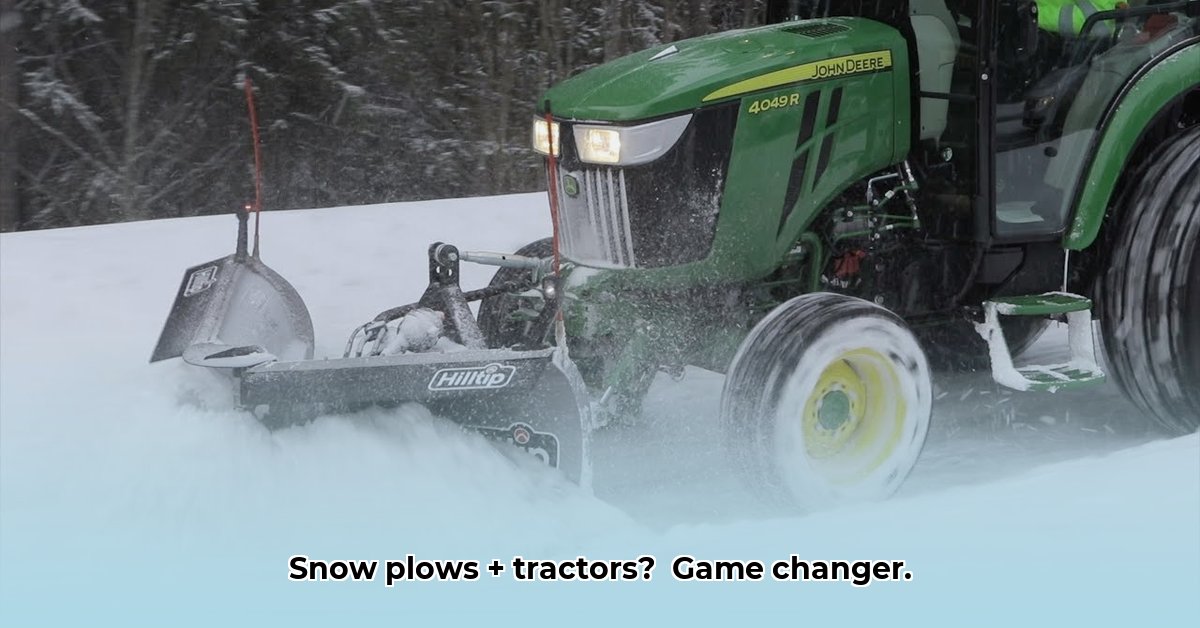
Snow Plow Tractor Solutions: A Sustainable Approach to Winter Farming
Winter's harsh grip can severely hinder agricultural operations. Fields buried under snow, impassable roads, and delayed livestock care represent significant challenges. However, modern tractors, equipped with specialized snow plow attachments, offer a powerful and increasingly sustainable solution. This article explores the evolving landscape of tractor-based snow removal, highlighting opportunities for increased efficiency and environmental responsibility. For more information on snow plow options, check out this helpful resource: tractor snow plow attachments.
Imagine John, a dairy farmer in Wisconsin, battling daily snowdrifts blocking access to his barns. His current method, using an aging pickup truck with a small plow, is laborious and inefficient. This struggle highlights the critical need for improved snow removal solutions in agriculture. While attachments from manufacturers like Western Plow offer versatile and powerful options, a significant gap exists: reliable comparative data on cost-effectiveness and environmental impact remains scarce. This article addresses that gap, providing actionable intelligence for farmers, manufacturers, and policymakers.
The Current State of Tractor-Based Snow Removal: Power and Potential
Modern tractors offer unparalleled power and versatility for snow removal. A quick change of attachments transforms a machine used for fall plowing into a winter snow-clearing powerhouse. The ease of use and adaptability makes this appealing to farmers. However, the lack of readily available data comparing the long-term costs and environmental effects limits widespread adoption of optimal practices. This information gap creates challenges in determining the most efficient and sustainable strategy for individual farms and hinders broader industry progress.
The Sustainability Imperative: Balancing Efficiency and Environmental Responsibility
Sustainable agriculture necessitates responsible choices at every stage, including winter snow removal. Gas-powered tractors, while powerful, contribute to greenhouse gas emissions. Manual methods, while environmentally friendly in their energy use, are vastly inefficient for large areas. The disposal of worn parts adds to landfill waste, compounding existing environmental concerns. This necessitates a shift towards sustainable snow removal practices.
This shift involves using recycled materials in plow construction and developing more energy-efficient equipment designs. This includes exploring the use of recycled steel in plow blades, reducing reliance on virgin materials, and designing plows with improved aerodynamics to minimize energy consumption. For John, embracing sustainable practices translates to lower operational costs and a smaller carbon footprint – benefits crucial for both his farm's bottom line and the environment.
Market Overview and Future Trends: Opportunities and Challenges
The market for tractor-based snow removal attachments shows significant growth potential. However, several challenges persist. The high initial investment cost represents a substantial hurdle for many farmers, particularly smaller operations. The lack of readily available comparative data on equipment performance and environmental impact also hinders informed decision-making.
Despite these challenges, several promising trends are emerging. Innovations in sustainable materials, such as recycled steel and bio-based polymers, promise to revolutionize plow design. Technological advancements, such as automated plowing systems, could further increase efficiency and reduce labor needs. These developments offer exciting possibilities for a more sustainable future in agricultural snow removal, enhancing profitability and environmental stewardship.
Actionable Recommendations: Guiding Farmers and Stakeholders
To effectively address the challenges and unlock the market's potential, a multi-pronged approach is crucial:
For Farmers:
- Assess Current Practices: Analyze current snow removal costs, time investment, and limitations to identify areas for improvement.
- Explore Leasing Options: Consider leasing equipment before committing to a significant purchase to test suitability and ROI. A trial period validates the efficacy of sustainable equipment.
- Prioritize Sustainability: Selectively choose attachments made from recycled materials or featuring enhanced fuel efficiency.
For Manufacturers:
- Enhance Transparency: Provide comprehensive data on product lifespan, environmental impact, and performance metrics.
- Invest in R&D: Fund research into developing sustainable and energy-efficient designs. Collaboration with academics and industry peers should be a priority.
- Promote Data Sharing: Publicly share performance and environmental data to facilitate better decision making within the sector.
For Researchers:
- Conduct Life-Cycle Assessments: Perform comprehensive studies evaluating the full environmental impact of different snow removal techniques. This includes manufacturing processes, material sourcing, fuel consumption, and end-of-life disposal.
- Focus on Efficiency: Investigate novel ways to minimize emissions and enhance energy efficiency, incorporating advancements in materials science.
- Foster Collaboration: Actively share research findings and collaborate with farmers and manufacturers to translate research into practical solutions.
For Government Agencies:
- Provide Financial Incentives: Offer subsidies and tax breaks to encourage the adoption of sustainable snow removal equipment.
- Implement Clear Standards: Create specific environmental and safety standards for agricultural snow removal equipment. This will encourage responsible innovation and fair competition.
- Fund Research Initiatives: Invest in research and development programs focused on sustainable snow removal technologies, ensuring widespread access to reliable and unbiased data.
Conclusion: Embracing a Sustainable Future
Addressing the challenges of snow removal in agriculture is crucial for maintaining operational efficiency and promoting sustainable farming practices. The use of tractor-based snow removal solutions presents a significant opportunity for improvement. However, unlocking the full potential of this technology requires further research, collaboration, and innovative solutions, fostering a more efficient and environmentally sound agricultural landscape. The investment in sustainable snow removal solutions will yield strong returns for farmers and the environment alike.